A Data-driven Response to COVID-19
I was part of the British Airways COVID-19 response project. Amongst other things, I developed a series of intuitive, self-service Tableau dashboards using various data sets. My work received praise from the CEO and was used on a regular basis by him and many other decision-makers across the organisation to support their work during the crisis.
Here is an article I wrote summarising the project, along with screen shots of some of the dashboard(s):
COVID-19 has impacted the global economy in profound and pervasive ways. Global aviation in particular has been severely impacted, as government travel restrictions have been imposed and customers are uncertain about the perceived risks of flying.
In early 2020 as a crisis loomed, British Airways proactively prioritised the collection and analysis of data relating to the impending pandemic, to ensure it was at the heart of any required response. Data has subsequently driven complex decision-making throughout the crisis, drawing on the most up-to-date and relevant insight possible as the situation has evolved.
Organising and delivering transformation with data at this scale required a considered and swift response, unlike anything ever seen. When the coronavirus began impacting flying in Asia (in February and March), the BA analytics team immediately recognised a threat, with initial data analysis warning of similarities to trends seen during the SARS crisis of 2003 (albeit larger). As a result, a special cross-functional project was created with representation from teams across the airline. This gave the two-way benefit of drawing on team’s expertise whilst simultaneously enabling a fast and direct communication channel to support decisions in all affected areas.
The transformation project can be summarised by three key streams:
- Preparation: Data collection
- Analysis: Data analysis and implementation
- Forecasting: Data Science for strategic decision support
The first transformation stream relates to the collection and preparation of data and the establishment of a data framework to allow rapid and flexible consumption.
After an extensive review of internally and externally available sources, automated collection processes were deployed to gather as much relevant data as possible (~20 distinct sources). This was achieved through methods including automated API calls, web scraping, and by simply scheduling scripts to pull and join BA data into a specially created project database.
The data gathered was categorised into “medical”, “reaction”, or “airline industry” data. Medical included things like the number of COVID-19 confirmed cases or deaths per region/country, as well as factors to infer scale of COVID-19 impact such as population size or metrics measuring healthcare quality. Reaction data included details of enforced government restrictions, and various indicators of customer reaction such as mobility indexes (how freely people can travel) and web sources (Google searches, Skyscanner/Expedia searches, media and social sentiment). Airline data included sources such as market capacity data (how many flights are operating), and corporate travel ban policies.
The outcome was a single, detailed, and rich data resource that could be accessed and deployed instantly across BA to solve the multitude of complex challenges that COVID-19 threw up.
The second transformation stream involved deploying this data in the form of analysis and data insight, allowing teams to understand the data and guiding them in solving these complex challenges.
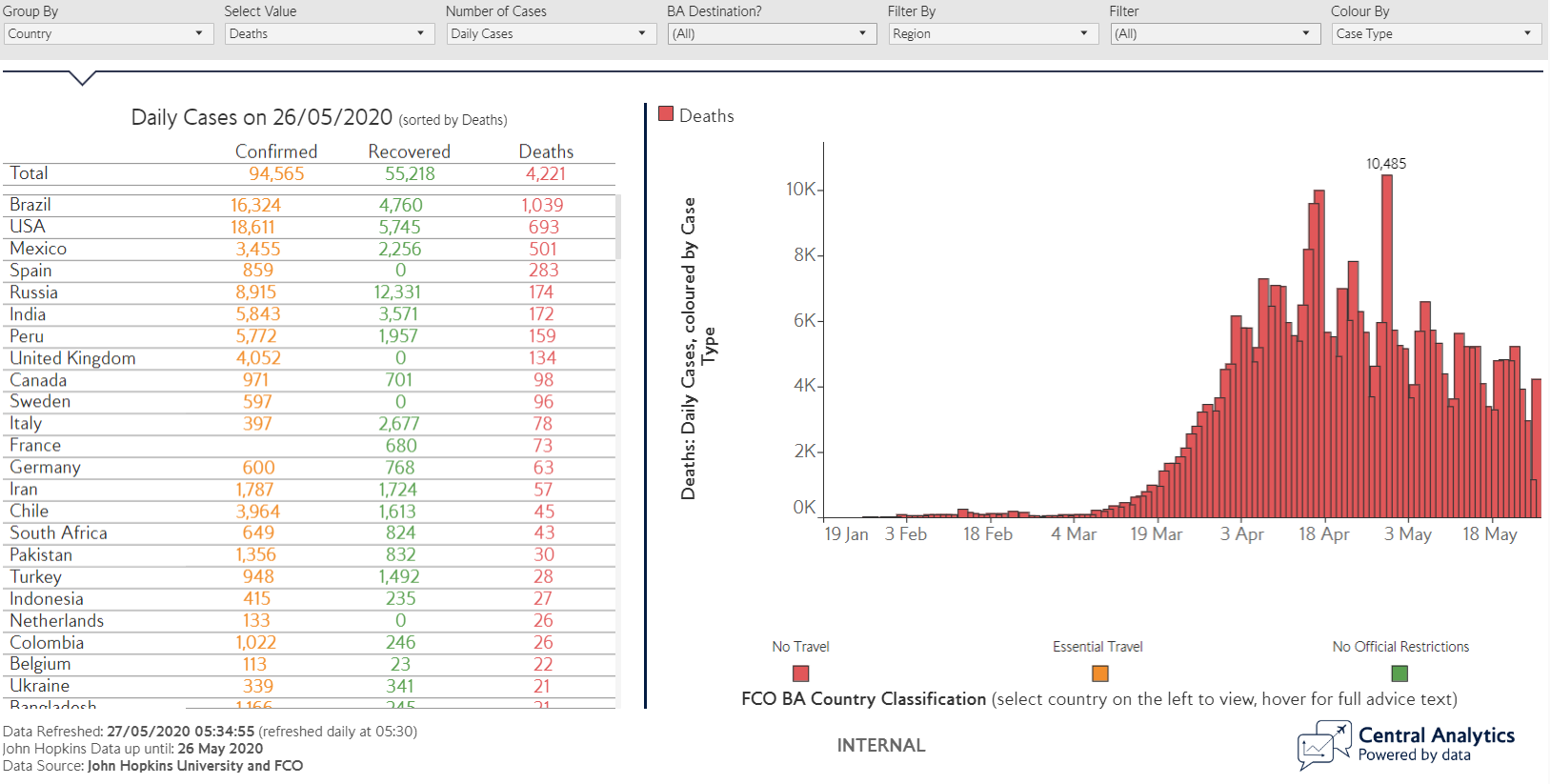
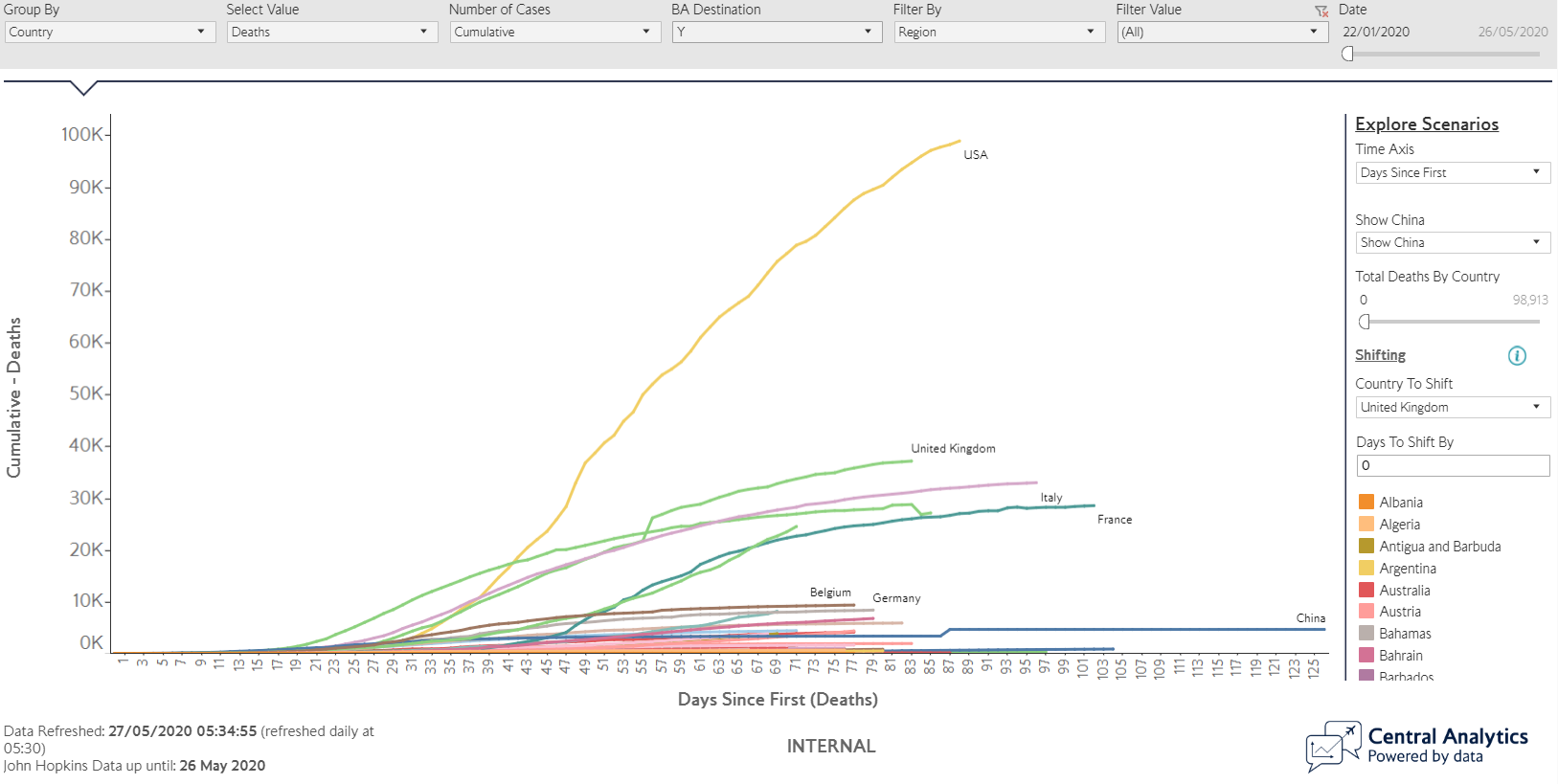
This was primarily achieved via a “Central Insights Hub”, developed as a one-stop shop for tapping into learnings from the data. This consisted of a series of 8 interconnected Tableau dashboards (accessed via a single portal), each serving a unique and valuable function.
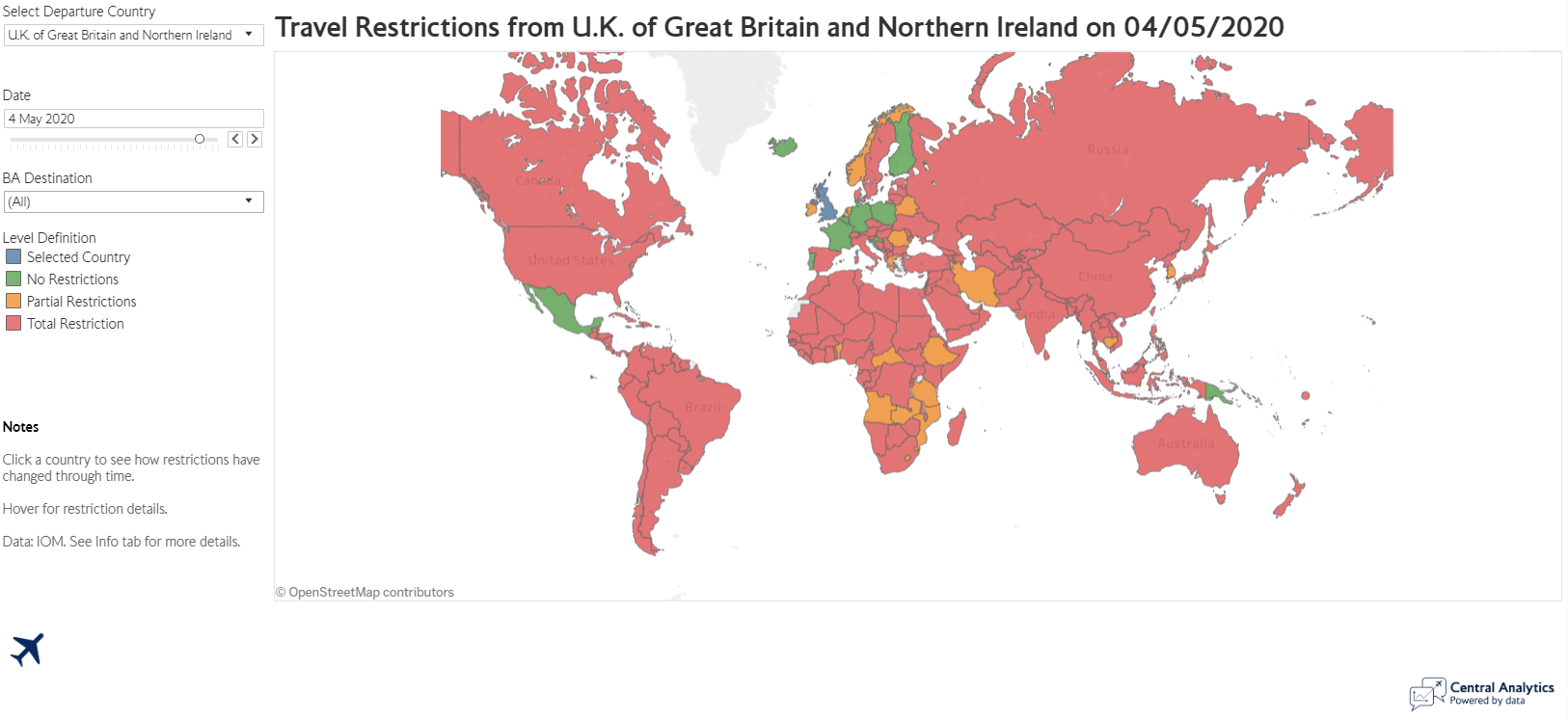
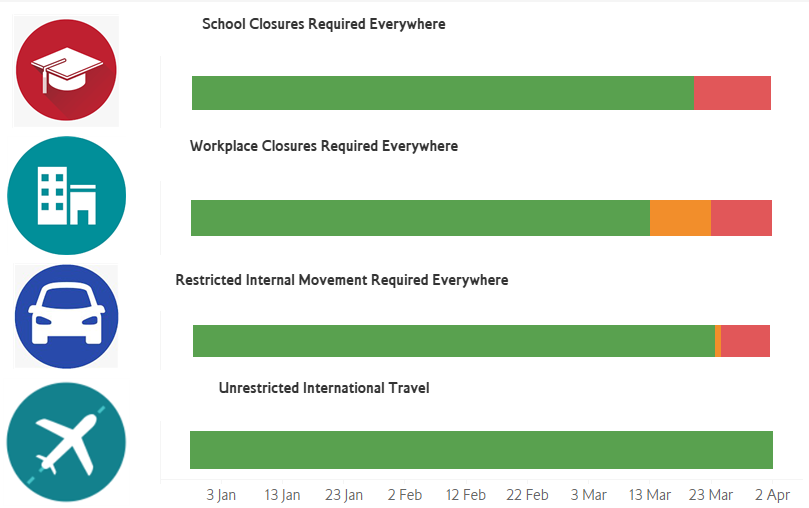
Primary purposes were to track and compare how the crisis is unfolding in different countries (virus cases and government restrictions), understand market conditions (future planned capacity on routes for BA and other airlines), and to understand and plan recovery.
For each view, data was collated from all relevant sources. External sources were supplemented by BA-specific data to quickly pinpoint trends that impact the BA network specifically.
Several Key Performance Indicators (KPIs) were also created to instantly highlight important aspects to the user. These included a “return to normality index” (tracking how “normal” life in a country is), a “market recovery index” (combining 8 data sources into a single weighted score), and a “travel restriction classification” (classifying the Foreign Commonwealth Office travel restriction text advice using a python text classification model).
Dashboards were developed iteratively to deliver value as quickly as possible. The first iteration of the first dashboard was released to users across BA within 24 hours of inception, and over the following weeks went through many iterations as new data sources became available and were rolled into views to increase the quality and richness of the insight.
The Insights Hub has racked up over 2000 views per month at all levels of the organisation ranging from the CEO down to analysts and operational planners, as teams have sought data to support their work. It was also opened up to partners (IAG airlines including Aer Lingus, Iberia, and Vueling), increasing its reach far beyond the BA operation. These views in turn supported hundreds of decisions, ranging from the cancellation of flights to virus hotspots (to minimise risks to customers), through to decisions around social distancing in airports.
The third and final transformation stream encompasses the project’s forward-looking predictive work to drive wider strategic decisions.
Using the new database, a predictive model was built to forecast demand for flights on each route for the coming year. The model was supported by 7 categories of carefully documented and scrutinised assumptions derived from detailed analysis (for example, demand spill and recapture between regions, restrictions for connecting flights etc.). Results have been used to drive crucial decisions ranging from when to remove and add capacity to routes, through to decisions around future fleet composition (when to lease new aircraft or retire older ones).
The overall outcome of the three transformation streams has been hundreds, if not thousands of coordinated and data-driven decisions, ranging from micro-decisions about individual flights all the way up to sweeping strategic decisions about the future structure of the network.
The rapid transformation, coupled with buy-in for an extensive universal data framework, have ensured data has been at the heart of decisions large and small, whilst ensuring consistency across the airline and avoiding duplication, typically common in large organisations during periods of rapid change.